Once you have played a few games, almost everything you still need is in the pickleball doubles rules: who serves, which side they serve from, why the score is called as three numbers, and when you and your partner swap. Doubles is what nearly every club in Australia plays, and it is where the rules stop being trivia and start deciding points. Here is the plain-English version, then the positioning and strategy that wins more club games than power does.
If you are newer than that, start with our pickleball rules guide, which covers the serve, the two-bounce rule, the kitchen and scoring from scratch. Everything below sits on top of those four. The rules are the same at a Tuesday social session and at a Pickleball Australia sanctioned event, so what you learn here travels.
Only the serving team can score, and it changes how you play
This is the rule the whole game is built on. If the receiving team wins the rally, they do not get a point, they get the serve. Games go to 11 and you have to win by 2, so scorelines like 12-10 and 15-13 are normal.
The consequence is bigger than it looks. When you are receiving, you cannot win the game in that rally, you can only win the right to start winning. So the receiving team's job is patience: get the ball back, get to the kitchen line, and wait for the error. Trying to end a rally with a winner while you are receiving is how most club players hand the serve straight back.
Pickleball doubles rules for serving: who serves, and from where
The serve itself is unchanged from singles: underhand, contact below the navel, at least one foot behind the baseline, and it must travel diagonally into the opposite service box while clearing the kitchen. Our guide to serving in pickleball has the full checklist, including the drop serve.
What doubles adds is rotation:
- Both partners serve before the serve passes over, with one exception. At the very start of the game, the first serving team only gets one server. That is why the game begins at 0 - 0 - 2.
- Win the rally while serving and you swap sides with your partner. The same player keeps serving, now from the other side of the court. Keep winning and you keep swapping.
- Lose the rally while serving and the serve moves to your partner, who serves from wherever they are standing. If it was already the second server, it is a side-out and the other team serves.
- The receiving team never swaps. Receivers stay on the side they are on for the whole of the other team's service turn. The correct receiver is simply whoever is standing diagonally opposite the server.
The trick for not losing track: your side is set by your own team's score. If your team's score is even, the player who started the game on the right-hand side is on the right. If it is odd, they are on the left. That one check resolves almost every mid-game argument before it starts.
How pickleball scoring works in doubles (the three numbers)
Call the score out loud before every serve, as three numbers: your team's score, then their score, then whether you are the first or second server. So "4 - 2 - 1" means your team has 4, theirs has 2, and you are the first of your team's two servers.
Worked through from the start of a game:
- 0 - 0 - 2. The first serving team gets one server only, so they begin as the second server. This exists so the team that serves first does not get a free double turn.
- They win the rally: 1 - 0 - 2, and the server swaps sides with their partner.
- They lose the rally: side-out. The other team starts at 0 - 1 - 1, and from here on both partners get to serve.
It feels fiddly for about a week, then it clicks. Saying it aloud is not a formality, it is the mechanism: the third number is the only thing that tells four people whose turn it is, and nobody writes it down.
Where to stand: the positioning that decides most club points
The rules say almost nothing about where you stand. The game says almost everything.
Two principles cover most of it. Move as a pair. You and your partner are joined by an invisible rope about two metres long: if one of you is at the kitchen line and the other is at the baseline, the diagonal gap between you is the easiest target on the court. Go up together, come back together.
Get to the kitchen line and stay there. The team that owns the line wins the majority of social doubles points, because from there you can hit down and your opponents have to hit up. The shot that gets you there is the third shot drop, and it is worth more practice time than your serve. Avoid the transition zone, the strip between the baseline and the kitchen line: there is no shot you can play well from in there.
The middle ball is the other recurring argument. Default rule: the player with the forehand in the middle takes it, and whoever is taking it calls it. Two silent players both reaching is how a sitter goes through the gap between you.
Stacking in pickleball: what it is and when it is worth it
Stacking means both partners set up on the same side of the court before the ball is struck, then move to their preferred sides once it is. It is legal because the rules only dictate where the server stands and which player must receive. The server's partner, and the receiver's partner, can stand anywhere on their own side.
Two reasons to bother:
- A left-hander and a right-hander. Stack so both forehands sit in the middle, and the strongest shot on each side of the pair covers the ball that comes down the centre.
- A big difference in forehands. If one of you has a much better forehand, keep it in the middle where most balls end up.
The honest caveat: stacking adds a scramble to every point, and if you are still losing track of the third number it will cost you more in confusion than it gains you in coverage. Get the serve rotation automatic first, then try it on your service points only, which is the half where the movement is simplest.
The gear that actually helps at the kitchen line
Doubles is decided in a strip about two metres deep with the net in your face, so the specs that matter are not the ones that sell paddles. Power is close to irrelevant at the line. What changes how a hand battle feels is swing weight, which is how quickly you can get the paddle up, and twist weight, which is how much help you get when you catch the ball off-centre. Our paddle weight guide goes into both properly.
The useful thing is that this spec does not track price. Across four paddles in stock here right now, swing weight spans only 11 points:
| Paddle | Price | Swing weight | Twist weight |
|---|---|---|---|
| Aireo Cyclone X Hybrid | $280.80 | 107 | 6.5 |
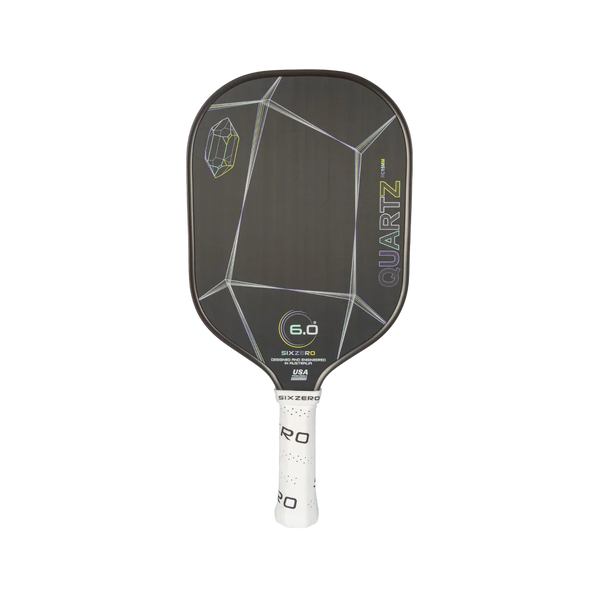
| Six Zero Quartz | $99 | 108 | 6.4 |
| Six Zero Coral Light Weight 16mm | $275 | 108 | 6.2 |
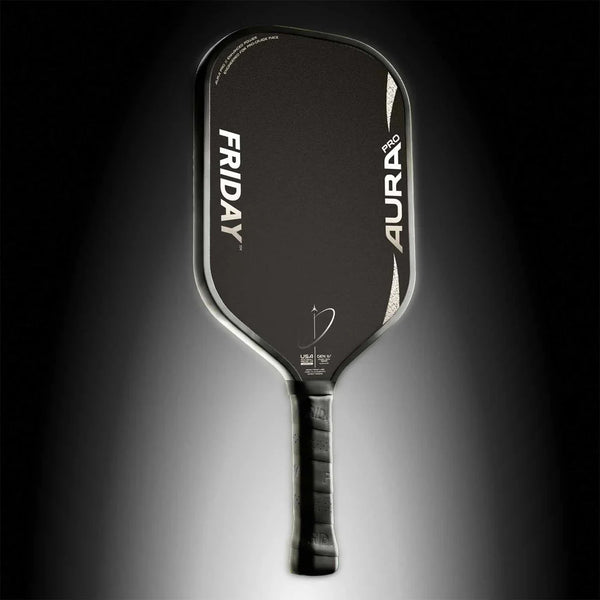
| Friday Fever 102 Gen 3 | $175 | 118 | 6.4 |
The $99 Quartz sits one point off the lightest-swinging paddle we sell, which is why it is the one we point most new doubles players to. The Fever 102 is 11 points heavier through the swing, and you feel that in a fast exchange more than you feel it on a serve. If the kitchen game is where you want to improve, browse the control pickleball paddles or the all-court pickleball paddles; if you are buying a first paddle, the beginner pickleball paddles range is the shorter list. Getting a doubles group started from nothing is what the pickleball sets are for. Free AU shipping over $150, excluding bulky items like nets and bulk ball boxes.
One more thing worth checking before you blame the paddle: how you are holding it. A grip that is too strong is a common reason players cannot reset a fast ball at the line, and our guide to holding a pickleball paddle covers it.
The doubles faults and calls that cause arguments
Most doubles disputes are one of five things:
- Volleying in the kitchen. Including when your follow-through carries you in after the ball has gone. Full detail in our kitchen rules guide.
- Breaking the two-bounce rule by volleying the serve or the return of serve.
- Serving into the kitchen or onto the kitchen line, which is short and a fault. Every other line is in.
- Serving from the wrong side, or the wrong player receiving. Use the even-or-odd check above.
- Losing the third number, which is not a fault but causes more stoppages than anything else on this list.
On the wrong server or wrong receiver: stop and fix it before the serve is struck rather than after. The rulebook has changed more than once on how these are handled once a rally is under way, so if it actually matters, in a league or a tournament, read the current USA Pickleball rulebook or Pickleball Australia's rules and scoring page rather than taking the word of the loudest person on court.
What to work on first
If you want an order: get the three-number call automatic, then the even-or-odd side check, then moving up as a pair, then the third shot drop, and only then stacking. That is roughly the sequence in which each one stops costing you points.
Brand new to all of it? Read pickleball for beginners in Australia next, then go and play a set. The rules make a lot more sense with a paddle in your hand and someone calling the score at you.
Pickld carries the brands featured here. Picks are based on live product specs and customer order data, not affiliate incentives.