Pickleball paddle weight is the spec most people check second and understand least. Nearly every paddle on our shelf lands between 213 g and 233 g, which is 7.5 oz to 8.2 oz, so the number moves by less than 20 grams across the entire range. Yet two paddles at identical weight can feel nothing alike in your hand. Here is what the number does, what it hides, and which weight actually suits your game. All prices in AUD.
The short answer on pickleball paddle weight
If you have no particular reason to go either way, a mid-weight paddle around 224 g (7.9 oz) with a swing weight near 112 sits in the middle of the market and is where most Australian players end up. Go lighter if you want quicker hands at the kitchen, or if your elbow has opinions. Go heavier if you want more free power on drives and more stability when you catch the ball off-centre.
What the static weight on its own will not tell you is which paddle is which. That is the part worth understanding before you spend $300.
Static weight vs swing weight
Static weight is what the paddle reads on the scales. Swing weight is how heavy it feels once you actually swing it, because it accounts for where that mass sits. Shift a few grams towards the tip and swing weight climbs fast. Put them in the handle and the paddle whips around more easily, even though the scales have not moved at all.
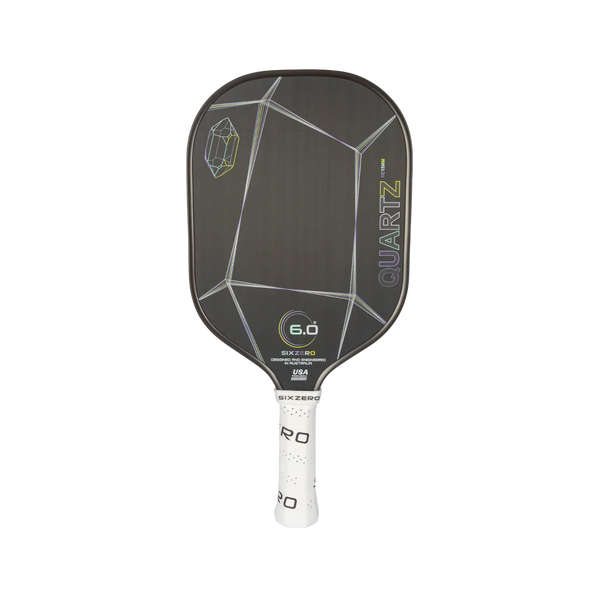
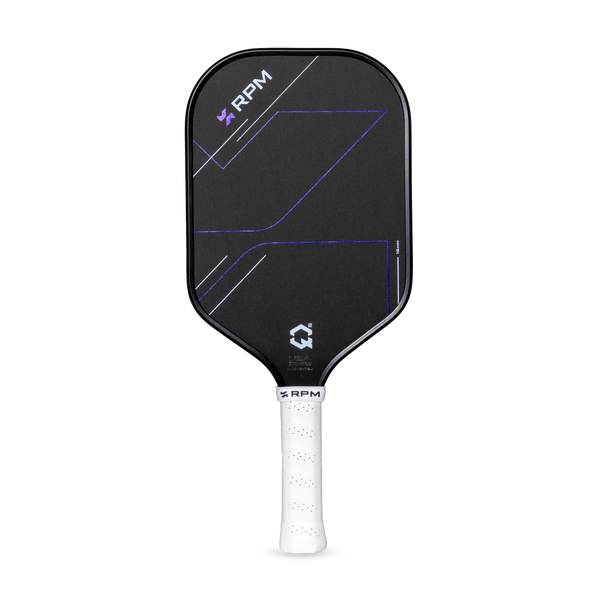
Two paddles we stock make the point better than any explanation:
| Paddle | Static weight | Swing weight | Twist weight | Price |
|---|---|---|---|---|
| Six Zero Quartz | 224 g (7.9 oz) | 108 | 6.4 | $99 |
| RPM Blackout V2 Elongated 16mm | 224 g (7.9 oz) | 117 | 6.5 | $358 |
Identical on the scales, nine points of swing weight apart. The Quartz feels light and quick. The Blackout V2 feels like it wants to drive the ball through the court. When a player tells you a paddle is too heavy, nine times out of ten they are describing swing weight, not weight.
Twist weight is the third number there. It measures how much the paddle resists twisting when you catch the ball away from the middle. Higher is more forgiving. It is not a weight class, but it moves with the same build decisions, so it is worth reading alongside.
What each weight band feels like
These are real numbers off our own spec sheets, not rounded marketing figures. Every paddle below is in stock as this is written.
| Paddle | Static weight | Swing weight | Twist weight | Shape | Price |
|---|---|---|---|---|---|
| Aireo Cyclone X Hybrid | 215 g (7.6 oz) | 107 | 6.5 | Hybrid | $280.80 |
| Six Zero Coral Light Weight 16mm | 215 g (7.6 oz) | 108 | 6.2 | Hybrid / widebody | $275 |
| Six Zero Quartz | 224 g (7.9 oz) | 108 | 6.4 | Widebody | $99 |
| RPM Blackout V2 Elongated 16mm | 224 g (7.9 oz) | 117 | 6.5 | Elongated | $358 |
| Six Zero Coral 16mm | 232 g (8.2 oz) | 114 | 6.7 | Hybrid / elongated | $275 |
| Friday Fever 102 Gen 3 (Snow) | 232 g (8.2 oz) | 118 | 6.4 | Elongated | $175 |
Three bands, roughly:
- Light, about 213 g to 218 g (7.5 to 7.7 oz). Fast hands, easy resets, less effort per swing. You give up some free power and the paddle punishes off-centre contact a bit more.
- Mid, about 220 g to 227 g (7.8 to 8.0 oz). The bulk of the market. Enough mass to block a hard drive without wearing you out over three hours.
- Heavier, about 228 g to 233 g (8.0 to 8.2 oz). More plough through the ball, more stability, more fatigue. This is where most of the big-swing-weight power paddles live.
Note how badly those bands map onto swing weight. The Quartz at 224 g swings lighter (108) than the Coral at 232 g (114), which is what you would expect. But the Blackout V2 at the same 224 g swings heavier (117) than both. Read both numbers or you will buy the wrong feel.
Lightweight pickleball paddles: who they actually suit
Lightweight paddles get recommended to beginners by default, which is only half right. The real cases are these.
You play a lot of hands battles at the kitchen and keep getting beaten to the second volley. Lower swing weight is the fix, and the Aireo Cyclone X Hybrid is the lowest on our shelf at 107, in a hybrid shape that keeps a usable sweet spot.
You came across from tennis or squash and your arm is already used to a racquet, but pickleball asks for far more repetitions per hour. Dropping swing weight is usually more comfortable than dropping static weight.
You play three or four sessions a week and the last hour is where your shots fall apart. That is fatigue, not technique, and it responds well to a lighter build.
If you are still working out what you like, our beginner pickleball paddles and control pickleball paddles are where the lighter-swinging options are concentrated.
Heavier paddles: who they actually suit
Weight is free power. A heavier paddle at the same swing speed puts more pace on the ball, and it stays pointed where you aimed it when contact is scrappy. If your drives keep sitting up, or the ball keeps knocking your paddle face open on hard returns, more mass is the honest answer.
The Friday Fever 102 Gen 3 is the clearest example we stock: 232 g with a swing weight of 118, in an elongated shape, at $175. It is not a subtle paddle. That is the point of it, and it is why it keeps turning up in our power pickleball paddles range.
The trade is real though. Heavier paddles are slower to reset at the net and harder on the arm over a long session. Nobody wins a hands battle with a plank.
The cleanest test: one paddle, two weights
Almost every weight comparison you read online changes three things at once: the face, the core and the shape. Six Zero gives us a rare like-for-like.
The Six Zero Coral 16mm is 232 g with a swing weight of 114 and a twist weight of 6.7. The Six Zero Coral Light Weight 16mm is about 215 g with a swing weight of 108 and a twist weight of 6.2. Same face, same core thickness, same family, same $275. The only meaningful variable is mass.
What 17 grams buys you: roughly six points of swing weight, noticeably quicker hands, and half a point of twist weight given up in exchange. That is the whole trade, stated plainly, with nothing else moving. If you want to understand what weight does to a paddle, that pair is the experiment.
It is the same approach we took with core thickness in our guide to 14mm vs 16mm pickleball paddles, where the same paddle exists in two cores.
Weight, your elbow and your shoulder
We are not physios and this is not medical advice, so take it as what players tell us rather than a prescription. The pattern we hear most often is that people with sore elbows do better on a lower swing weight than on a lower static weight, and that going too light can make things worse because a light paddle transmits more shock from the ball. Paddle construction matters here too: a foam-perimeter build absorbs more than a stiff, hollow one, which we cover in our explainer on foam cores and thermoformed paddles. If something hurts, see someone qualified before you buy a paddle to fix it.
You can change a paddle's weight after you buy it
Weight is one of the few specs you can tune yourself. Lead tape at the throat adds mass with almost no swing-weight penalty. Lead tape at 10 and 2 near the tip adds plenty of swing weight and stability. An extra overgrip adds 5 g to 10 g in the handle, which makes the paddle feel lighter to swing even though it is heavier on the scales. Our guide to grips, overgrips and lead tape covers how to place it without ruining the balance.
The practical upshot: buy slightly light rather than slightly heavy. Adding weight is a five minute job. Removing it is not possible.
So what weight should you buy?
- First paddle, no strong preference: 224 g with a swing weight around 108 to 112. The Six Zero Quartz at $99 is exactly that, which is why it is the one we hand to people who are still deciding.
- Your hands are getting beaten at the kitchen: drop the swing weight, not necessarily the paddle weight. Look for 107 to 110.
- Your drives lack pace, or the face keeps turning on contact: go up to 230 g or over, or find a swing weight of 116 or more.
- You play four-plus times a week: err light. Fatigue costs more matches than a missing 10 grams of power.
- You already own a paddle you nearly love: do not buy a new one. Buy lead tape.
If you would rather answer a few questions than read spec tables, our paddle finder does the narrowing for you, and our full range of pickleball paddles lists weight and swing weight on every listing. For the shortlist by play style rather than by spec, start with our best pickleball paddles in Australia guide.
Questions we get asked
What is the best weight for a pickleball paddle? There is no single best. Around 224 g (7.9 oz) with a swing weight near 112 suits the largest number of players, which is why most paddles cluster there, but a hands player and a power baseliner should not buy the same paddle.
Are lightweight pickleball paddles better for beginners? Sometimes. A lighter swing weight is easier to control and less tiring, but a very light paddle gives up stability on off-centre hits, which beginners produce more of. A mid-weight paddle with a forgiving twist weight is usually the better first paddle.
Do heavier paddles really add power? Yes, at the same swing speed. The catch is that a heavier paddle slows most people's swing speed, so the gain is smaller than the spec sheet suggests. Swing weight is where the power actually shows up.
How much do pickleball paddles weigh? Almost everything we sell sits between 213 g and 233 g (7.5 oz to 8.2 oz). Anything well outside that is either a junior paddle or a novelty.
Still not sure? Hit reply on any of our emails or send us a message. We would rather talk you into the right paddle than sell you two.
Chris
Pickld carries every brand featured here. Picks are based on the specs we publish and what customers actually reorder, not affiliate incentives. Specs and prices were pulled from our live catalogue on 21 September 2026. Free AU shipping over $150, excluding bulky items.