


Pickleball tournaments in Australia are far less mysterious than they look from the outside. You enter a division, you play a handful of short games against people rated near you, and you are usually home by the evening. The part that trips people up is never the pickleball. It is working out which division to enter, who you are entering with, and what to put in the bag the night before.
Here is the whole thing in plain terms.
How pickleball tournaments are put together
Two words do most of the work: event and division.
The event is what you are playing: men's doubles, women's doubles, mixed doubles, or singles. Doubles is where almost everyone starts, and doubles entries are taken per pair, so you need a partner locked in before you enter anything.
The division is who you are playing against inside that event. Organisers split the field by skill (the familiar 2.5, 3.0, 3.5, 4.0, 4.5 and 5.0 plus bands) or by age in five or ten year brackets, and plenty of events run both, so a 3.5 player in their fifties can choose. Bigger draws split further, smaller ones merge bands to make a field. If you have ever played in a club ladder, it is the same idea with a medal at the end.
Format varies by event, and that is the bit worth checking rather than assuming. The two you will meet most often are a round robin pool, where you play everyone in your group and the top finishers move on, and a straight knockout or double elimination draw. Games are usually to 11, win by two, with medal matches sometimes played as the best of three. Expect short games and plenty of them, which is why fitness shows up in the afternoon rather than the morning.
Read the event's own entry page before you commit to anything. Formats, divisions, the nominated ball and the day's running order are all the organiser's call, they differ between events, and they change year to year. Nobody else's summary is the authority on it, including this one.
Which division should you enter?
The honest answer is the one you can defend on court.
If you have a DUPR rating, use it: it moves with your results, so it saves an argument with an organiser about where you belong. If you have never been rated, play a few sessions with people who have, and ask them where you sit. Most players guess a half band too high.
The temptation runs the other way too. Entering well below your level, so that your first medal is cheap, is the fastest way to be remembered badly at a club you will see again in three months. Enter where you sit, lose a few, and move up next time.
If you are still shaky on the serve, the kitchen line or how the scoreline is called out, the pickleball rules explained for Australian players guide and the pickleball scoring walkthrough will save you more points on the day than any paddle will.
What to pack for a pickleball tournament
A tournament day is the one time your gear matters more than usual, because you cannot nip home for the thing you forgot.
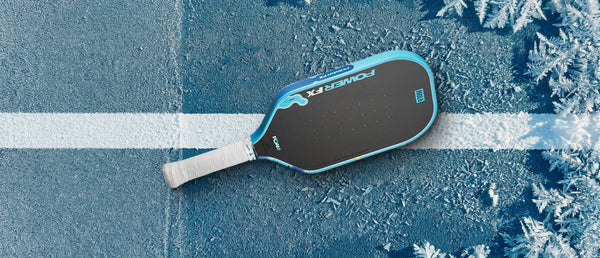
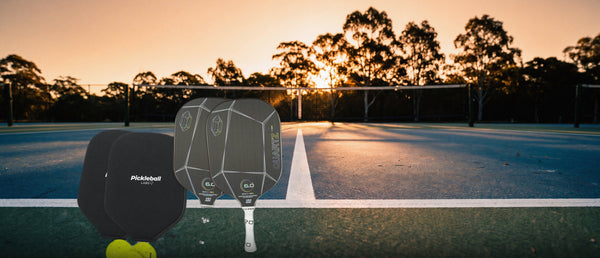
Two paddles. This is the single piece of advice that comes up again and again from players who have done a season of events. Faces delaminate, edge guards lift, and a paddle that chips in the warm up ends a day that was otherwise going well. Carry the same model twice if you can, so nothing changes in your hand mid draw, and keep the spare in a Pickleball Labs Paddle Cover ($19.95) so it is not rattling against a water bottle. If you are still choosing the first one, our ranking of the best pickleball paddles in Australia is the place to start.
A fresh grip, fitted the night before. Not on the morning, and not between matches. A Pickleball Labs Hexacore Grip ($35.00) is a two minute job at home, and the difference between a confident swing and a tentative one when your hands are wet in February.
Your own balls for the warm up. The event supplies match balls, but warm up courts are first in, best dressed, and a pack in the bag means you are hitting while everyone else is looking around. The Franklin X-40 Outdoor Pickleballs 12 Pack ($47.95) is the obvious one, for the reason in the next section.
A bag that actually holds a day. Two paddles, balls, a towel, a spare shirt, food and two litres of water is more than a shoulder sling manages. The Six Zero Performance Pickleball Backpack ($149.99) carries the lot with a separate shoe compartment, and there is more on the trade offs between a backpack and a duffle in our pickleball bags guide, or look through the pickleball bags range.
Then the unglamorous half: sunscreen, a hat, electrolytes, more food than you think, and a second pair of socks. If you wear glasses on court, or have been meaning to, the pickleball eye protection rundown covers what is worth having. Free AU shipping over $150, excluding bulky items, if you are putting an order together before an event.
The ball is the event's call, not yours
Most events nominate the ball they will play, and the sensible move is to practise with that ball for a few weeks beforehand. A ball that sits up and one that skids change your third shot more than a new paddle does.
The Franklin X-40 is the one you will meet most on outdoor courts. Franklin's own spec puts it as approved for outdoor tournament play by USA Pickleball, and as the official ball of both USA Pickleball and the US Open Pickleball Championships. If your event nominates something else, go with the event. Our full range of outdoor pickleball balls has the common ones, and the indoor versus outdoor pickleballs explainer covers why an indoor ball behaves nothing like an outdoor one.
Is my paddle allowed?
For sanctioned events, the paddle has to be on the approved list, and the list is live rather than permanent: paddles do get added, and occasionally pulled. We wrote up how that works when a whole brand was delisted and then reinstated model by model, in what actually happened to Luzz paddles. Before you enter anything sanctioned, check the approval status of the exact model and thickness you own, rather than the brand. If you cannot find it and we sell it, hit reply and we will chase it down for you.
Club level and social events are usually far more relaxed, but the entry page will say.
Common questions
Do I need a rating to enter? Not for most events, which run age and open divisions as well as rated ones. A rating gives you a better draw rather than access.
Can I enter on my own? For doubles you need a partner at entry. Some organisers keep a partner wanted list, and most clubs will find you someone if you ask early enough. Singles needs nobody.
How many games will I play? In a round robin pool, usually three to five short games, plus playoffs if you get there. It is a long day of short bursts, not a few long matches.
Where do I find events near me? Club pages and state association calendars carry them, and your local courts are the fastest source. Our guide to where to play pickleball in Australia is a good place to find the clubs near you to ask.
Enter one. The first one is the only one that feels big, and the standard of play at 3.0 and 3.5 is far more human than the highlights reels suggest. If you are getting your kit sorted and want a second opinion on what to carry, hit reply, we read every one.
Pickld carries the brands featured here. Picks are based on customer order data and product specs, not affiliate incentives.
Ben