If you have just picked up a paddle, the pickleball rules can look like a lot. They are not. There are really only four things that trip up new players in Australia: the serve, the two-bounce rule, the kitchen, and the way scoring works. Learn those four and you can play a proper game today. This is our plain-English guide to how to play pickleball, written for Aussie players who want to get on court without wading through a 60-page rulebook.
Everything below follows the same international rules used at clubs and Pickleball Australia-sanctioned events across the country, so what you learn here holds up whether you are playing socially at your local court or entering your first tournament.
The court and the kitchen (the 30-second version)
A pickleball court is 20 feet wide and 44 feet long, the same size for singles and doubles. The net sits at 36 inches (91cm) at the sidelines and dips to 34 inches (86cm) in the middle. The bit that matters most for the rules is the non-volley zone, the 7-foot strip on each side of the net that everyone calls the kitchen. Almost every rule that catches beginners out comes back to that zone.
If you want the full measurements to mark out a court at home, we cover them in our pickleball net height and court dimensions guide. For now, the four rules below are all you need to start a game.
Pickleball serve rules: how to serve legally
The serve is the most rules-heavy shot in the game, but the checklist is short. A legal serve is:
- Underhand. Your arm swings upward and you contact the ball below your navel, with the paddle head below your wrist.
- Started behind the baseline. At least one foot stays behind the baseline, and you cannot touch the baseline or the court until after you have hit the ball.
- Hit crosscourt. The serve travels diagonally into the service box on the opposite side, and it must clear the kitchen. A serve that lands in the kitchen or on the kitchen line is a fault.
You get one serve attempt. Two things surprise players coming from tennis. First, there is no let: since 2021 a serve that clips the net and still lands in the correct box is live, so you play it. Second, you can use the drop serve instead: drop the ball from your hand (no throwing or adding spin), let it bounce, then hit it. The drop serve has no height or below-the-waist restriction, which is why a lot of beginners find it the easier way to start every point cleanly.
The two-bounce rule
This is the one rule that makes pickleball play the way it does. After the serve, the ball has to bounce once on each side before anyone is allowed to volley (hit it out of the air):
- The server serves.
- The receiving team must let it bounce once before returning it.
- The serving team must then let that return bounce once before hitting it.
After those two bounces, the ball is live and either team can volley or play it off the bounce. The two-bounce rule (some people call it the double-bounce rule) stops the serving team from rushing the net and smashing the return, which is exactly what keeps the long, patient rallies that make the game fun. Forget it and you will volley the return out of the air, which is a fault, and hand over the point.
Pickleball kitchen rules (the non-volley zone)
The kitchen rule is simple to state and easy to break: you cannot volley the ball while standing in the kitchen or touching the kitchen line. A volley is any ball you hit before it bounces. So if the ball is coming at you out of the air and your feet are in that 7-foot zone, you have to let it bounce first or back out before you hit it.
Two things to remember:
- Momentum counts. If you volley from just outside the line but your follow-through carries you into the kitchen, it is still a fault, even after the ball is gone. You have to land and stay out.
- You are allowed in the kitchen any time for a ball that has bounced. The zone is not lava. You can step in to play a dropshot that has landed, you just cannot volley from in there.
Most beginner points are lost at the kitchen line, so if you take one rule away today, take this one.
How pickleball scoring works
Standard pickleball scoring is side-out scoring, and the golden rule is this: only the serving team can score a point. If the receiving team wins the rally, they do not get a point, they get the serve.
Games are played to 11 and you have to win by 2, so a game can run out to 12-10, 15-13 and so on. (Some tournaments play to 15 or 21, still win by 2, but 11 is the standard social game.)
In doubles the score is called as three numbers, for example "0 - 0 - 2": your team's score, the other team's score, and whether you are the first or second server. Both players on a team get to serve before the serve passes over, with one exception: at the very start of the game the first serving team only gets one server, which is why the game begins at 0 - 0 - 2. It feels fiddly for a week, then it clicks. Say the three numbers out loud before every serve and you will not lose track.
What counts as a fault
A fault ends the rally. The common ones are:
- Hitting the ball out of bounds or into the net.
- Volleying while in the kitchen or touching its line.
- Letting the ball bounce twice on your side before you return it.
- Breaking the two-bounce rule by volleying the serve or the return.
- Serving into the net, into the kitchen, or into the wrong service box.
One line call to know: any ball that lands touching a line is in, with the single exception of the serve landing on the kitchen line, which is short and a fault.
Pickleball rules are the same right across Australia
You do not need a different rulebook for Sydney, Melbourne or Perth. Social clubs and Pickleball Australia-sanctioned tournaments all run on the same international rules covered above, which are maintained in the official USA Pickleball rulebook if you ever want to read the fine print. Learn the four core rules and you can walk onto any court in the country and play.
What you actually need to start playing
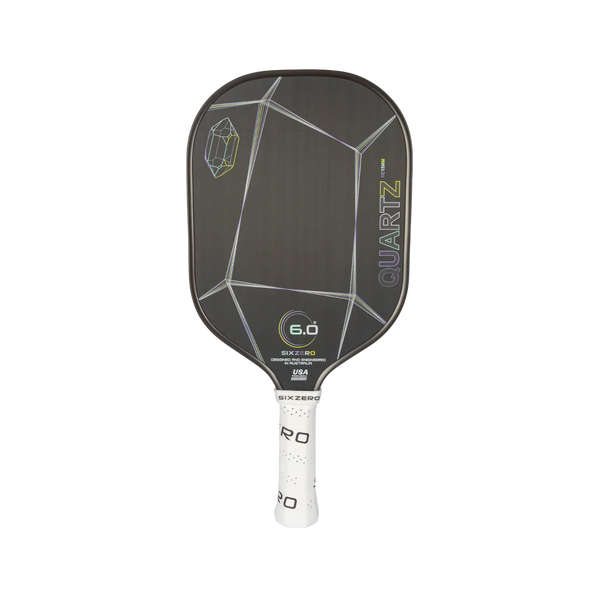
You need three things: a paddle, a ball, and a net (or a court that already has one). If you are just getting into it, a good-value control paddle makes learning the two-bounce rhythm and the kitchen game far easier than a stiff, powerful pro paddle. The Six Zero Quartz at $99 is the one we point most new players to: forgiving, light, and easy to place. If you want a touch more paddle to grow into, the Friday Fever 102 Gen 3 at $175 is a proven all-court starter. Browse the full range on our Starter Pickleball Paddles collection.
Getting a few mates playing in the backyard or at the local court? The Pickld Value Set ($418.95) puts a regulation Selkirk net, two Six Zero Quartz paddles and Franklin X-40 balls in one box, everything the rules above describe, ready to play. There are bigger four-paddle and pro options in the Pickleball Sets collection too. Free AU shipping over $150.
New to the whole thing and want the wider getting-started picture, not just the rules? Read our pickleball for beginners in Australia guide next, then grab a paddle and go play. The rules make a lot more sense with one in your hand.
Pickld carries the brands featured here. Picks are based on what actually suits new players and on customer order data, not affiliate incentives.