If you want one part of your game that pays off every single point, it is the serve. Learning how to serve in pickleball properly means you start every rally on the front foot instead of just poking the ball in and hoping. Get the pickleball serve rules right, groove one repeatable motion, and you stop handing away free points. Here is how the serve actually works, the two legal ways to do it, and how to add spin once the basics are locked in.
The pickleball serve rules, in plain English
Before the technique, the rules, because a serve that breaks them is a fault no matter how clean it looks. For a standard (volley) serve:
- Underhand only. Your paddle has to be moving in an upward arc when it strikes the ball.
- Contact below the waist. The point of contact must be below your navel.
- Paddle head below the wrist. The highest part of your paddle can't be above the highest part of your wrist at contact.
- Behind the baseline. Both feet behind the line, neither foot touching the court, until after you strike.
- Cross-court, past the kitchen. The serve travels diagonally and must clear the non-volley zone (the kitchen) and its line. Land it in the correct service box.
You get one serve attempt (there are no "lets" in the current rules, even off the net). Serve from the right when your score is even, the left when it's odd.
If the below-the-waist, below-the-wrist checklist sounds fiddly, that's exactly why the drop serve exists.
The drop serve: the easy legal option
The drop serve takes the arc-and-height rules off the table. You hold the ball out, let it drop on its own, and hit it after the bounce. Because you're not "striking" a served ball out of the air, the below-the-waist and upward-arc requirements don't apply. You can even hit it off the bounce with a flatter, more natural swing.
The trade-off: you get less pace, because you're only working with the energy off one bounce. For a lot of newer players that's a fair swap. A legal, repeatable serve beats a powerful one that gets called a fault. Plenty of good club players use the drop serve as their main delivery and never look back.
How to serve in pickleball: a repeatable technique
Whichever serve you pick, consistency comes from doing the same thing every time. Here's a simple sequence for the volley serve:
- Set up side-on. Stand behind the baseline with your non-paddle shoulder pointing at your target box. Feet about shoulder-width.
- Hold the ball out in front. Paddle-side hand back and low. Release the ball off your other hand so you're hitting a falling ball, not a tossed one.
- Swing low to high. Start the paddle below the ball and brush up through it in one smooth arc. Contact happens out in front of your body, below the waist.
- Aim deep, not hard. Target the back third of the service box. A deep serve pins your opponent behind their baseline and buys you time.
- Follow through to your target. Let the paddle finish up and toward where you want the ball to go. Then split-step and get ready.
Deep and repeatable is the whole game at club level. You're not trying to ace anyone, you're trying to start the point with them on the back foot.
The mistake that costs the most points
The single most common serve error isn't a fault, it's going for too much. Players try to crush the serve, spray it long or into the net, and gift the other team a point before the rally starts. A serve into the net is the worst shot in pickleball because nothing good can come of it.
Dial the pace back to about eight out of ten and put it deep. You'll win more points from a serve that lands than from one that's spectacular half the time. Once your deep serve lands nine times in ten, then you start adding weapons.
Adding a pickleball spin serve
Once the basics are automatic, spin is the next layer. A pickleball spin serve uses topspin or slice to make the ball dip, kick or skid, which makes the return awkward.
- Topspin: brush up the back of the ball more aggressively. The ball dips down into the box and kicks forward off the bounce, rushing your opponent.
- Slice: cut across the ball low to high but with a slightly open face. It stays low and skids, so the returner has to dig it out.
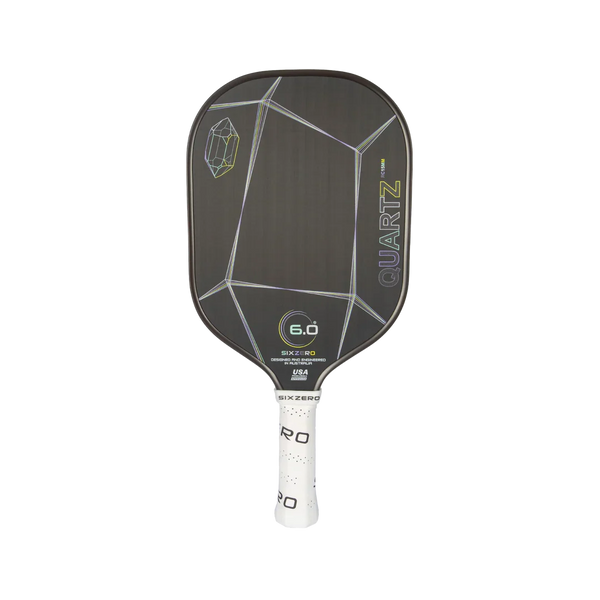
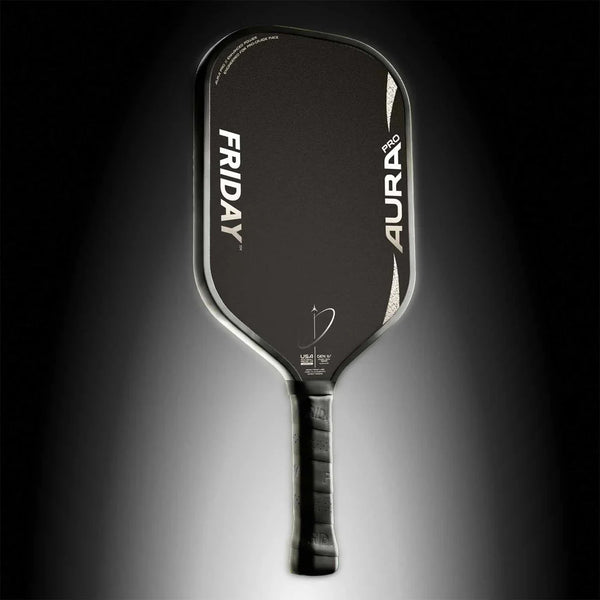
Two things make spin possible: a paddle with a genuinely grippy face, and a fresh, round ball. A raw carbon or textured surface bites the ball far more than a smooth, worn one. If you're serious about spin, a spin-oriented paddle like the Aireo Cyclone gives you the surface to work with, and you can see the whole grippy-faced range in our spin pickleball paddles collection. Prefer placement and control over raw spin? A control-first paddle like the Six Zero Coral 16mm rewards a steady, deep serve.
The gear that helps your serve
You don't need much to serve well, but two things make a real difference. A grippy-faced paddle (the Aireo Cyclone for spin, or the Six Zero Coral 16mm for control) lets you actually impart spin instead of just hoping for it. And fresh, round balls matter more than people think: a scuffed or out-of-round ball bounces unpredictably and quietly wrecks your consistency. A pack of Franklin X-40 outdoor balls, the official ball of USA Pickleball, keeps your practice honest. All Australian-stocked, with free shipping over $150.
Put it into practice
Serving is the one shot you get to rehearse in total isolation, no partner required. Take a bucket of balls to the court, stand at the baseline, and hit twenty serves deep into one box, then twenty into the other. Groove the motion until it's boring. A boring, reliable serve wins more games than a flashy one.
For the finer points of what's legal (score-calling, positioning, faults), our full pickleball rules guide walks through the whole rulebook in plain English. And if you're brand new to the game, start with how to actually get started with pickleball in Australia. The official serve rules live in the USA Pickleball rulebook if you want the letter of the law.
Get the serve landing deep and repeatable first. Add spin second. That order wins points.
Ben