A pickleball dink is a soft shot hit from at or near the kitchen line that drops into your opponent's non-volley zone and stays low enough that they cannot hit down on it. That is the entire job: take the pace off, make them play the ball from below the net, and wait for the one they pop up. Most club points in Australia are decided in that soft exchange, not by anybody's drive. Here is how to hit one, where to stand, the mistake that lifts it, and the two paddle numbers that genuinely help.
What is a dink in pickleball?
A dink is an unattackable soft shot. It is played off the bounce, it crosses the net with very little pace, and it lands short in the non-volley zone so your opponent has to contact it low and lift it back. There is no rule that defines a dink, which surprises people: the only rule that shapes it is the non-volley zone itself, which says you cannot volley a ball while standing in the kitchen or touching its line. That is why the shot has to bounce, and it is why a ball that lands deep in the kitchen is so dangerous for the person hitting it.
Worth knowing before you work on the shot: stepping into the kitchen to play a dink off the bounce is completely legal. The full set, including the momentum rule that catches more club players than any other, is in our pickleball kitchen rules explainer, and the governing wording is in the USA Pickleball rules summary that Pickleball Australia plays to.
Dink or drop: what is the difference?
Same hands, different starting point. A dink is hit from at or near the kitchen line into the kitchen. A third shot drop is the same soft-hands skill hit from the baseline or the transition zone, and its job is to buy you the trip up to the line in the first place. If your dink is solid, your drop gets easier, because the contact feel is identical and only the distance changes. We wrote the longer version of that shot in the third shot drop guide.
One more distinction that matters in a game: a dink is not a reset. A reset is defensive, played under pressure from anywhere on the court, and you are happy if it simply lands soft. A dink is a position you have chosen, and it should have intent behind it.
How to hit a pickleball dink, step by step
- Get your feet to the line first. Toes at the kitchen line, knees soft, weight forward. Nearly every bad dink is a footwork problem wearing a technique costume.
- Hold it continental, paddle up and in front. One grip for both wings, paddle face out where you can see it. If you are unsure which grip you are using, our guide to how to hold a pickleball paddle covers it in a minute.
- Take the ball out in front, below the waist. Contact happens in front of your front knee, never beside your hip. Late contact is what forces you to flick.
- Lift from the shoulder, with a quiet wrist. Think of pushing the ball up and over with the whole arm, like sliding a plate across a table. The paddle face stays open and does the work. Aim to clear the tape by about the width of your hand.
- Reset and stay down. Back to ready, paddle up, knees still bent. Dink exchanges are won by the player who is still in a good position on the eighth ball.
Target choice: cross-court to your opponent's backhand is the highest-percentage dink, because the diagonal is the longest part of the court and the net is lowest in the middle. Straight-ahead dinks are shorter, which means less margin, so hit those when you want to change the rhythm rather than by default.
The mistake that pops your dink up
Almost always the wrist. The ball arrives, you have let it get beside you, and your hand snaps to rescue it. The paddle face opens late, the ball climbs, and your opponent is already stepping in to put it away.
The second most common fault is standing a step behind the line. From there the ball bounces up at you instead of away from you, so every dink becomes a half volley. The fix for both is the same: move your feet earlier and take the ball in front with a quiet hand. Film ten dinks on a phone from the side of the court; you will see which one you are doing.
Why do good players dink so much, and what is a dead dink?
Because attacking a low ball from the kitchen loses more points than it wins. Patience at the line is not passive play, it is arithmetic: the player who refuses to speed up a ball below net height forces the other pair to take the first risk. In doubles that logic doubles, which is why dink exchanges are long and why our pickleball doubles rules guide spends so much of its time on position.
A dead dink is one with nothing in it: no depth, no spin, no angle. It lands around the middle of the kitchen at a comfortable height and gives your opponent a free attack. Every dink should move someone, make them reach, or buy you time. If it does none of those three, it is dead, and the point is now theirs to start.
The two paddle specs that actually help a dink
Not power, and not core thickness. The two numbers that change a dink exchange are swing weight, which decides how quickly you can get the paddle back to ready, and twist weight, which decides how much the face resists turning when you catch the ball off centre. Dinks are hit off centre constantly, so twist weight is the forgiveness number for this shot.
Here is the in-stock Pickld control range, lowest swing weight first, with the live numbers from each paddle's own spec sheet:
| Paddle | Price | Swing weight | Twist weight | Grip length | Weight |
|---|---|---|---|---|---|
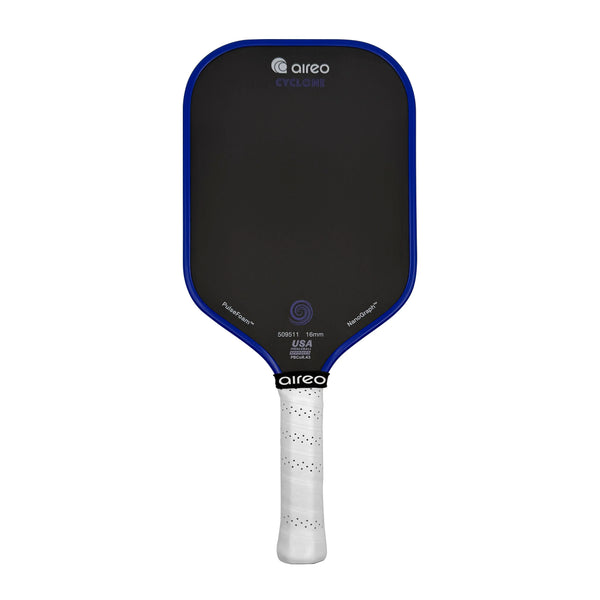
| Aireo Cyclone X Hybrid | $312 | 107 | 6.5 | 5.6 in | 215 g |
| Friday Aura Widebody 16mm | $215 | 107 | 6.6 | 5.5 in | 223 g |
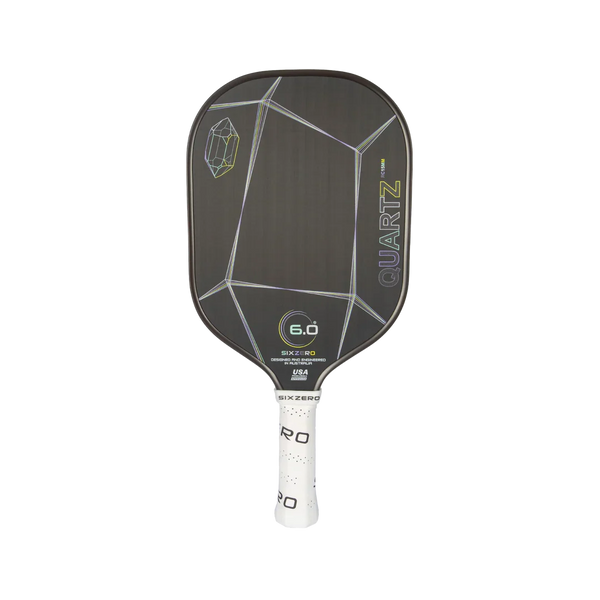
| Six Zero Quartz | $99 | 108 | 6.4 | 5.0 in | 224 g |
| Six Zero Coral Light Weight 16mm | $275 | 108 | 6.2 | 5.5 in | about 215 g |
| Luzz Glider 2026 Hybrid 16mm | $159 | 111 | 6.4 | 5.31 in | 225 g |
| Honolulu J2CR Crystal Blue | $308 | 110 to 114 | 7.0 | 5.5 in | 227 to 235 g |
| Six Zero Ruby | $249 | 117 | 6.8 | 5.5 in | 233 g |
Two things fall out of that table, and both are useful if you are shopping.
Forgiveness does not track price. The highest twist weight on our shelf is the $308 J2CR at 7.0, but the $215 Friday Aura Widebody is 6.6 and the $99 Quartz is 6.4, while the $215 Friday Aura Elongated sits at 5.9 and the $149.99 Six Zero Sapphire at 5.68, the lowest numbers in the whole range. Spending more buys you a face, a core and a finish. It does not reliably buy you a steadier paddle at the kitchen line.
Hand speed barely moves. Across every control paddle we have in stock, swing weight runs from 107 to 117. Ten points. That is a real difference if you are in a fast hands battle, and it is a rounding error next to standing a step off the line. The paddle is a small lever on your dink and your feet are the large one, which is the honest version of this answer even though it sells fewer paddles.
If you are starting out and want a genuine carbon paddle without spending much, the Quartz is $99 and its twist weight beats paddles at twice the money; there is a full Six Zero Quartz review if you want the detail. If you want the most forgiving face at the line, the J2CR is the one, and there is an extended-handle version of it if you hit a two-handed backhand. If you want light and quick, the Aireo Cyclone X Hybrid and the Coral Light Weight are the two lightest-swinging paddles we sell. Browse the lot in control pickleball paddles, or start with beginner pickleball paddles if this is your first proper paddle. The paddle finder narrows all 118 pickleball paddles by shape, thickness and style in a few taps.
One number we would ignore for this shot: core thickness. Thicker cores do feel plusher on a soft ball, but the gap between 14mm and 16mm is much smaller than the marketing suggests, and we put the measurements side by side in 14mm vs 16mm. Static weight is similar: our paddle weight guide shows why swing weight tells you more.
How to drill dinks on your own
A wall is the best dink partner in Australia, because it never misses and it never wants to drive. Stand about three metres back, dink into the wall above a chalk line at net height, and count how many you can keep going with a quiet wrist. Then move to targets: a towel in each back corner of the kitchen, ten cross-court, ten straight, swap. The rest of the solo options, including where a ball machine actually earns its money, are in our guide to solo pickleball drills.
Use the ball you play with. An indoor ball dinks softer and slower than an outdoor ball, so grooving touch on the wrong one teaches you a feel you cannot use on Saturday; the range is in pickleball balls. And if you are still getting the basics of the game down, the pickleball rules pillar covers scoring, the serve and the two-bounce rule in one place.
Everything above ships from our Sydney warehouse, with free AU shipping over $150. If you want a hand picking between two paddles for a soft game, send us a note and we will tell you which one we would take to the line.
Pickld carries the brands featured here. Picks are based on customer order data and published product specs, not affiliate incentives. Specs and prices were read live on 5 October 2026 and can change.