Singles is the quickest way to find out how fit you are. The pickleball singles rules are shorter than the doubles ones, and three of them change the game completely: the score is two numbers instead of three, you get one serve with no partner to hand it to, and which side you serve from is decided by your own score. Everything else, the serve motion, the two-bounce rule, the kitchen, the lines, is identical to doubles.
Here is the whole thing in plain English, then the part nobody writes about: which paddle actually helps when you are covering a 6.10 metre wide court on your own.
The pickleball singles rules that differ from doubles
There are four differences, and that is the lot.
- Two numbers, not three. Call your score, then your opponent's. "5 - 3". There is no third number, because there is no second server.
- One serve per turn. Lose the rally while serving and the serve goes straight to your opponent. No partner, no second server, and no 0 - 0 - 2 start.
- Your own score decides which side you serve from. Even score (0, 2, 4 and so on), serve from the right. Odd score (1, 3, 5), serve from the left.
- You move across as you score. Win a point on serve and you serve the next one from the other side, because your score has just flipped from even to odd.
The receiver has no side rule at all. You stand diagonally opposite whichever box the server is serving into, which in practice means you follow them. If you have come from doubles, the whole of the serve-rotation headache disappears: our pickleball doubles rules guide covers the three-number call and stacking, and in singles you can forget both. If you are brand new, start with the pickleball rules guide for the serve, the two-bounce rule, the kitchen and scoring from scratch.
How to score in singles: two numbers, not three
Games go to 11 and you must win by 2, so 12 - 10 and 15 - 13 are ordinary scorelines. Only the server can score. If you are receiving and you win the rally, you do not get a point, you get the serve. That is worth saying out loud because it changes how you play a rally you cannot win: the receiver's job is to stay in the point until the server makes the error.
Worked through from the start:
- 0 - 0. The first server starts on the right-hand side, because zero is even.
- They win the rally: 1 - 0, and they now serve from the left, because one is odd.
- They win again: 2 - 0, back to the right.
- They lose the rally: no point to anybody, and the serve passes over. The new server calls 0 - 2 and serves from the right, because their score is zero.
Say the score before every serve. It is not a formality, it is the only thing that tells both players which side the serve is coming from.
Which side to serve from, and the mistake almost everyone makes
The even-odd rule only ever applies to the player who is serving, and only ever to their own score. Two things follow that catch people out.
First, you do not change sides when you lose a rally. Losing a rally on serve means the serve changes hands, and the incoming server positions themselves by their own score, which is usually a different number. Second, the receiver never has to work anything out. If the server is on the right, you receive on your left as you look at the net. If they move, you move.
If you ever lose track mid-game, the fix is one question: what is the server's score? Even means right, odd means left. That resolves it every time, and it is why the score gets called rather than remembered.
One serve, and the rest of the serve is unchanged
The serve itself is exactly the doubles serve. It has to be underhand with contact below the navel and the highest part of the paddle head below your wrist, at least one foot behind the baseline, travelling diagonally into the opposite service box and clearing the kitchen. The kitchen line is short, so a serve landing on it is a fault. Every other line is in. The drop serve is still allowed as an alternative, and the below-the-waist and wrist constraints do not apply to it, which is the whole reason it exists. Our guide to serving in pickleball has the full checklist.
What singles takes away is the safety net. In doubles a missed first serve passes to your partner and your team keeps serving. In singles a missed serve is a point to your opponent, straight away. That is the single biggest reason club players who are good at doubles lose singles games: the same 60 per cent first-serve habit that costs a doubles team almost nothing costs you the match.
The two-bounce rule applies in full, so the serve must bounce and the return of serve must bounce before anyone may volley. The non-volley zone applies in full too, including the follow-through, and our kitchen rules guide covers the ways people fault there without noticing.
Where to stand in singles: the baseline, not the kitchen line
This is the rule the rulebook does not contain, and it is the reason doubles players lose their first few singles games.
In doubles, you and your partner race to the kitchen line and stay there, because two of you can cover the width from the line. On your own you cannot. The court is still 6.10 metres wide and 13.41 metres long, exactly the same as doubles, and a lone player standing at the kitchen line can be passed down either sideline at will.
So the default position in singles is the centre of the baseline, and the default recovery after every shot is back to the centre of the baseline. You come forward when your shot has actually forced a weak reply, hit your volley, and then you go back. Players who creep in and stay in get run side to side until their legs go, which usually takes about four points.
The corollary is that the serve matters far more in singles than in doubles. A deep serve to the backhand corner, from the middle of the court, buys you the whole next shot. A short serve hands your opponent the initiative in a game where there is nobody behind you.
Skinny singles: the version most club sessions actually play
If someone at your club invites you to play skinny singles, they are not talking about a rule in the rulebook. It is a half-court variation played for practice and for pairing up players of different fitness, and it comes in two common forms: cross-court, where both players use only the diagonal halves, or same-side, where both use the same sideline half. Scoring and serving follow the normal singles rules; the court is just narrower.
It is a genuinely good drill rather than a lesser game. Removing the width removes the option of hitting a winner, which forces the patient shots that most recreational players never practise. Along the same lines, our solo practice guide covers what you can do with a wall and a bucket of balls when there is nobody to play.
The paddle spec that matters in singles is not reach
Ask any singles player what paddle to buy and you will be told to get an elongated one for the reach. It is worth checking what that actually buys you, because the numbers are not what the shape language implies.
These are the elongated paddles in stock here right now, with their real measured figures:
| Paddle | Price | Body length | Swing weight | Static weight |
|---|---|---|---|---|
| Aireo Cyclone | $312 | 41.8 cm (16.5 in) | 112 | 213 g |
| Franklin C45 Hayden Patriquin 14mm | $379.99 | 41.7 cm (16.4 in) | 114 | 218 g |
| 11SIX24 Hurache-X Power 2 | $309 | 41.9 cm (16.5 in) | 114.9 | 227 to 235 g |
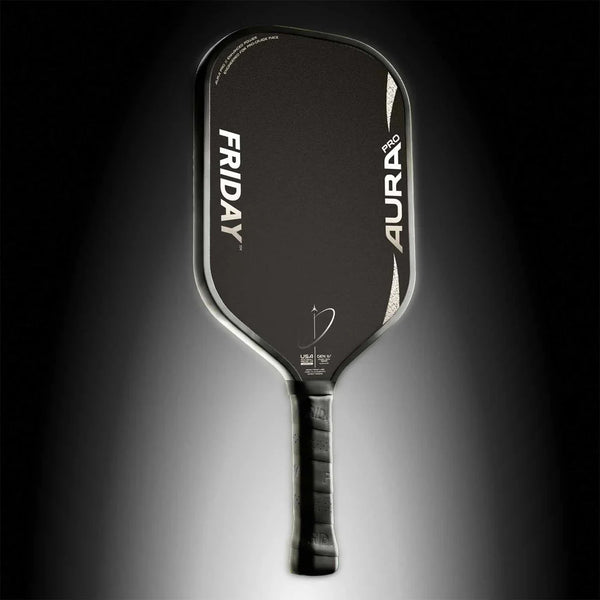
| Friday Aura Elongated 16mm | $215 | 41.9 cm (16.5 in) | 116 | 230 g |
| Friday Fever 102 Gen 3 | $175 | 41.9 cm (16.5 in) | 118 | 232 g |
Body length across all five spans 2 millimetres. Swing weight, which is how quickly you can get the paddle moving, spans 6 points. Static weight spans 19 grams. In other words, once you have chosen the elongated shape, reach is a constant and the only thing left to choose is how heavy the paddle feels after an hour of covering the whole court by yourself. That is the singles decision, and it is not the one the shape conversation is about.
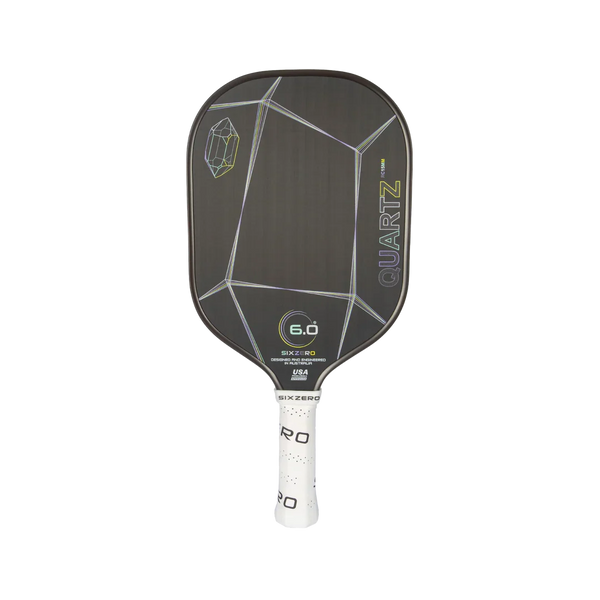
It is worth knowing how small the reach difference really is, too. The widebody Six Zero Quartz at $99 measures 40.6 cm, which is 1.2 cm shorter than the longest elongated paddle above. About half an inch. The Aireo Cyclone X Hybrid at $312 is 40.9 cm and the lightest-swinging paddle we sell at 107, which is why it suits players who would rather have fast hands than a long body.
If you want one pick from the table, it is the Aireo Cyclone: the full 41.8 cm elongated length at the lowest swing weight and the lowest static weight of any elongated paddle on the shelf, and the deepest stock in the range. If you want the same idea for a lot less, the Fever 102 is $175 and gives up 6 points of swing weight and 19 grams, both of which you will feel in the third game rather than the first.
Browse the full range of pickleball paddles, or narrow it by how you play: all-court pickleball paddles for a singles game built on movement, power pickleball paddles if you want to finish points from the baseline, and beginner pickleball paddles if this is your first one. Shape itself is explained properly in our paddle shapes guide, and the weight numbers in our paddle weight guide. Free AU shipping over $150, excluding bulky items like nets and bulk ball boxes.
Common singles questions
Is there a second serve in singles? No. You get one serve. Lose the rally and the serve passes to your opponent immediately.
What are the key differences between singles and doubles? The two-number score, one serve instead of two, serving side set by your own score, and no partner positioning. The serve motion, the two-bounce rule, the kitchen and the court are all the same.
Is the singles court smaller? No. Singles uses the same full court as doubles, 13.41 m by 6.10 m. Skinny singles uses half of it, but that is a club variation rather than a rule.
Have the singles rules changed for 2026? Not in any way that affects the four differences above. Annual rulebook updates tend to be clarifications rather than changes to scoring or serving, and if you are playing a league or a sanctioned event it is worth reading the current USA Pickleball rulebook or Pickleball Australia's rules and scoring page rather than relying on any article, including this one.
What to work on first
In order: get the even-odd side check automatic, then stop serving short, then make yourself recover to the centre of the baseline after every single shot. Those three cover most of the gap between a doubles player and a singles player, and none of them cost anything.
If you are still working out whether the game is for you, read pickleball for beginners in Australia, then go and play a singles game to 11. You will know within about six points.
Pickld carries the brands featured here. Picks are based on live product specs and customer order data, not affiliate incentives.