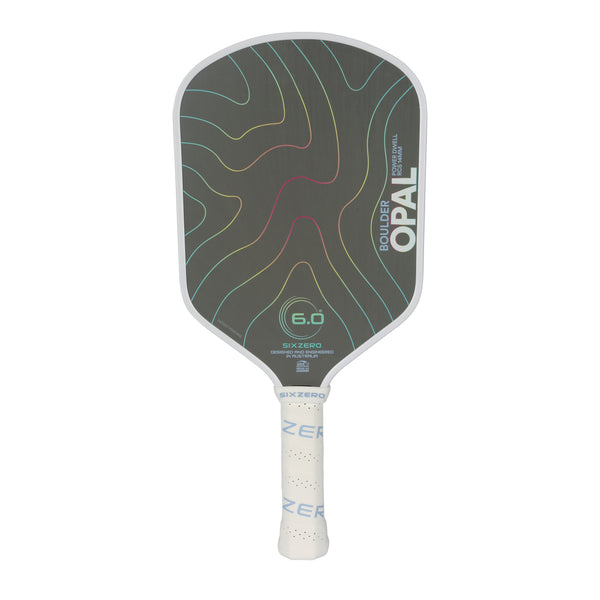
The Six Zero Ruby is the paddle in the Six Zero line that most Australian players walk past, and that is a shame, because it is doing something none of its siblings do. Where the Coral, the Quartz and the Black Opal all run a raw carbon face, the Six Zero Ruby swaps in a Kevlar (aramid fibre) hitting surface. That one change gives it a softer, more connected feel at contact while still spinning the ball hard, and it lands at a price that undercuts most of the raw-carbon range. If you play a control-first game and you have been curious about Kevlar, this is the Six Zero worth a proper look.
We are an Australian-stocked, authorised Six Zero dealer, so we have had these in hand. Here is the honest rundown: the specs, what the Kevlar face actually changes, how it plays, and who should buy it.
Six Zero Ruby specs
Every number here is off our live product record, not a spec sheet we copied from overseas.
| Spec | Six Zero Ruby |
|---|---|
| Face | Kevlar (aramid fibre) |
| Core | PP honeycomb, foam-injected edgewalls |
| Thickness | 16 mm |
| Shape | Hybrid |
| Weight | 233 g (8.2 oz) |
| Swing weight | 117 |
| Twist weight | 6.8 |
| Spin | 2,200+ RPM |
| Grip | 5.5 in length, 4.25 in circumference |
| Paddle area | 41.4 × 19.3 cm (16.3 × 7.6 in) |
| Price | $249 |
The headline story is the combination: a Kevlar face on a 16mm foam-edgewall core, tuned for control players who still want the ball to bite. If the jargon on that list is doing your head in, we broke down what foam core, thermoformed and Gen 4 actually mean in a separate guide.
What the Kevlar face actually changes
Kevlar is stiffer and denser than the raw carbon most paddles use, but Six Zero has paired it with the foam edgewalls to keep the contact feel soft rather than boardy. In practice that means two things you notice inside the first few rallies on the Ruby.
The first is touch. Dinks and resets come off the face with a planted, muted feel, the kind that makes it easier to take pace off a ball and drop it into the kitchen without it sailing. The second is grip on the ball: the Kevlar texture is different to raw carbon, and it holds spin well, with the Ruby rated at 2,200+ RPM. So you get the soft hands of a control paddle without giving up the ability to roll a heavy topspin dink or dig out a spinny third-shot drop.
The trade is that Kevlar surfaces are known to soften a touch as they wear, which is normal for the material rather than a fault. For a control player that break-in is usually a feature, not a problem.
How the Ruby plays
At the kitchen line, the Ruby is where it wants to be. The 16mm core and the foam edgewalls give it a stable, forgiving sweet spot, so off-centre blocks and resets do not spray on you. The twist weight of 6.8 backs that up: it means the head resists twisting on hits away from the middle, which is exactly what you want when you are absorbing a hard drive at the net.
It is not a one-trick control paddle, though. The swing weight of 117 is on the heavier side for this category, and that gives the Ruby genuine plow-through when you decide to drive from the baseline or step in on a speed-up. It will not out-punch a dedicated power paddle, but it holds its own, which is why we tag it as an all-court option rather than pure control. The 5.5in handle also leaves room for a two-handed backhand if that is part of your game.
Six Zero Ruby vs Six Zero Coral
The natural question for anyone shopping the Six Zero range is Ruby versus Coral, since the Coral is the raw-carbon paddle the Ruby is built alongside.
| Six Zero Ruby | Six Zero Coral 16mm | |
|---|---|---|
| Face | Kevlar (aramid) | Raw carbon |
| Thickness | 16 mm | 16 mm |
| Weight | 233 g | 232 g |
| Swing weight | 117 | 114 |
| Twist weight | 6.8 | 6.7 |
| Price | $249 | $275 |
They are closer than the price gap suggests. Both are 16mm, both weigh about the same, both sit in control-to-all-court territory. The real fork is the face: the Coral's raw carbon gives that familiar crisp, gritty carbon feel, while the Ruby's Kevlar is softer and more muted at contact. The Ruby also carries a slightly higher swing weight, so it feels a touch more planted through the ball on drives. And it is $26 cheaper.
Put simply: if you love the classic raw-carbon feel, the Coral is your paddle. If you want something softer in the hands with a different spin texture, and you would rather keep $26 in your pocket, the Ruby is the pick. We go deeper on the whole line, including the popular Coral, in our Six Zero paddles Australia dealer guide, and if you are weighing feel differences across the range, our Coral vs Black Opal breakdown and the Boulder Opal review are worth a read too.
Who the Six Zero Ruby suits
The Ruby is an intermediate-to-advanced paddle for the player whose game is built at the kitchen. If you win points by resetting hard balls, dinking with intent and picking your moment to speed up, rather than out-hitting people, this is squarely aimed at you. Kevlar-curious players who have only ever used raw carbon will get the most out of it, because the softer feel is genuinely different to what most of the range offers.
If you are chasing raw put-away power above all else, look at a dedicated power paddle instead. And if you are still finding your feet in the sport, we would point you at something more forgiving and cheaper first, which we cover in our guide to the best pickleball paddles in Australia by play style.
Price and availability in Australia
The Six Zero Ruby is $249, and being an authorised Six Zero dealer we hold it locally with free AU shipping over $150 and fast domestic delivery, so you are not waiting on an overseas order or gambling on grey-market stock. One honest note: we keep the Ruby in small batches and stock can run thin, so check the live Six Zero Ruby product page for current availability before you set your heart on one. You can also browse the full Six Zero paddle range if you want to compare it against the raw-carbon options side by side.
If you are torn between the Ruby and another Six Zero, hit reply on any Pickld email or drop us a message. Chris or I will tell you straight which one fits your game, because we would rather you buy the right paddle once than the wrong one twice.
Ben
Pickld carries the brands featured. Picks are based on customer order data and product specs, not affiliate incentives.