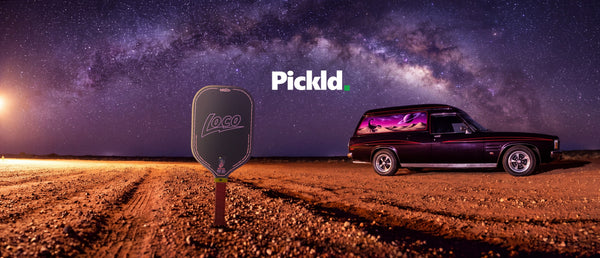
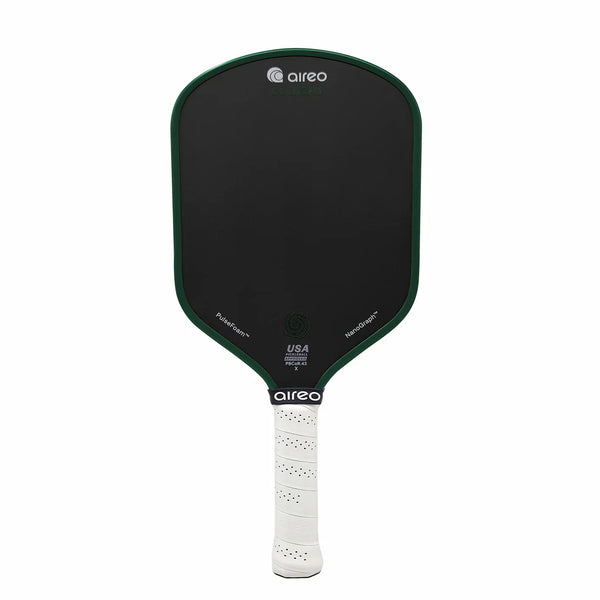
The RPM Blackout V2 is the all-black edition of the paddle James Ignatowich actually plays, and it just landed at Pickld. If you have been eyeing the Friction Pro V2 but want a cleaner, graphics-free look, this is the same power-and-spin platform with a refined carbon layup and an even bigger sweet spot. Here is an honest RPM Blackout review: what it is, how it plays, and which RPM paddle you should buy if you are choosing between the Blackout, the Friction Pro V2 and the Q2.
Quick answer: the RPM Blackout V2 Elongated 16mm ($358) is for the power-baseline player who wants elite spin, a huge stable sweet spot, and an all-black finish with no loud branding. It is available to order now and ships from our Australian warehouse.
What the RPM Blackout V2 actually is
Start with the honest bit, because it matters for your money. The Blackout V2 takes James Ignatowich's Friction Pro V2 platform, refines it with a new carbon layup and an even bigger sweet spot, and wraps the whole thing in a blackout finish. Ignatowich is a top-10 world-ranked professional, and this is the frame he co-designed and signed.
So it is not a different paddle to the Friction Pro V2 so much as the next tuning of it, dressed in all black. Same $358, same elongated shape, same 16mm core. If you already love how the V2 plays, the Blackout is that feel with a slightly larger sweet spot and a stealthier look.
The specs that matter
Everything below is straight off the product page, nothing invented.
| Spec | RPM Blackout V2 Elongated 16mm |
|---|---|
| Shape | Elongated |
| Core | 16mm Gen 3 tri-density foam core with EVA perimeter ring |
| Face | All-black CarbonBite carbon, RPM Axial Carbon Layup |
| Built for | Power-baseline players who want elite spin without giving up control |
| Certification | UPA-A Pro certified (tournament-legal) |
| Price | $358 |
The two things doing the heavy lifting here are the CarbonBite face and the foam construction. The CarbonBite surface is RPM's high-grit fibre finish, built to grab the ball for heavy topspin and a lively pop off the baseline. Behind it, the Gen 3 tri-density core and the EVA perimeter ring give you one of the largest, most connected sweet spots going, plus the torsional stability to hold up when you catch the ball off-centre. The 16mm core is the control half of the equation: the thicker profile adds touch and dwell time, which is what you want for resets and dinks at the kitchen line.
If foam-core and Gen 3 or Gen 4 language is new to you, we broke down what all the paddle jargon actually means in a separate guide.
How it plays
This is a power-first paddle with control you can trust, not the other way around. The elongated head gives you reach and leverage on drives and put-aways, and the CarbonBite face bites enough to shape heavy topspin third-shot drops and grinding slices. Because the sweet spot is big and connected, mishits do not fall off a cliff, which is the difference between an aggressive paddle you can actually play a full session with and one that punishes you on a bad day.
It suits an intermediate-to-advanced player (roughly DUPR 3.5 and up) who plays from the baseline, likes to drive the ball, and lives and dies by spin. If you are a control-first dinker who wants the softest possible hands and the widest face, the Blackout is more paddle than you need, and a widebody control frame will suit you better.
RPM Blackout V2 vs Friction Pro V2 vs Q2: which RPM should you buy?
All three are elongated RPM paddles around the same price, so the choice comes down to construction and finish.
| Paddle | Core / build | Best for | Price |
|---|---|---|---|
| Blackout V2 Elongated 16mm | Gen 3 tri-density foam, EVA perimeter ring, new carbon layup, bigger sweet spot | Power-baseline spin players who want the V2 feel and an all-black look | $358 |
| Friction Pro V2 Elongated 16mm | Gen 3 full-foam, Axial Carbon Layup, EVA ring, USAP approved, PBCoR .43 | The same platform in RPM's standard signature colourway | $358 |
| Q2 Elongated 16mm | Fully moulded EPP foam core, TPU perimeter inserts, 16.5in frame | Players who want a heavier, more connected foam feel with extra reach | $357.50 |
Blackout V2 vs Friction Pro V2. These are the closest pair. Same price, same Ignatowich platform. The Blackout is the refined version with a new carbon layup and a larger sweet spot, in a graphics-free all-black finish. Pick the Blackout if you want the newest tuning and the stealth look; pick the Friction Pro V2 if you prefer the standard signature colourway. We put the V2 head to head with the Q2 in our RPM Q2 vs Friction Pro V2 guide if you want the longer read on that platform.
Blackout V2 vs Q2. This is the more interesting decision, because the RPM Q2 is built differently. The Q2 was RPM's first paddle to ditch honeycomb for a fully moulded EPP foam core, co-designed with paddle engineer John Kew, with TPU perimeter inserts and a longer 16.5in frame. It plays heavier and more connected than the spec sheet suggests. The Blackout leans on a Gen 3 tri-density core with an EVA ring instead. Both are elongated power-spin paddles; the Q2 feels denser and more planted through the ball, the Blackout a touch more lively off the face. If you loved the Q2 already, our RPM Q2 review covers which spec to buy.
For the full lineup and where each RPM sits, our RPM pickleball paddles in Australia buying guide and the RPM Pickleball collection have the rest of the range.
The verdict
The RPM Blackout V2 is the easy pick if you already play, or want to play, RPM's Ignatowich elongated paddle and you like a clean, blacked-out look. You get the refined V2 tuning, a bigger sweet spot, and a genuine power-and-spin frame for $358. It is not the paddle for a control-first beginner, but for an aggressive baseline player it is one of the most complete elongated paddles in the range.
You can order the RPM Blackout V2 now, and it ships from our Australian warehouse. Free AU shipping over $150.
The Blackout V2 sits in our RPM pickleball paddles collection with the Friction Pro V2 and the Q2.
Pickld carries the brands featured, including RPM. Picks are based on customer order data and product specs, not affiliate incentives.