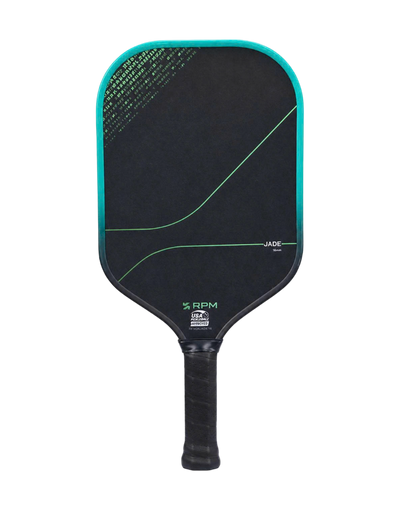
The RPM Q2 doesn't come in one flavour — it comes in four. 14mm or 16mm core, elongated or widebody shape, all at the same $357.50. So the real question in an RPM Q2 review isn't "is it good" (it is — it's one of our most popular pro-tier paddles), it's which RPM Q2 is right for your game. This guide breaks down all four specs so you buy once and buy right.
Pickld carries the brands featured. Picks are based on our own customer order data and the live product specs, not affiliate incentives. We're the authorised Australian RPM dealer — we ship the Q2 same-day from our Sydney warehouse.
TL;DR — the fast pick
Short on time? Here's the one-line version for each spec, then the detail below.
- Want the all-rounder most players should buy? RPM Q2 16mm Elongated — the connected, spin-heavy hero of the range.
- Baseline driver who lives on hand speed? RPM Q2 14mm Elongated — thinner core, faster rebound, quicker hands.
- Doubles kitchen player who wants forgiveness? RPM Q2 16mm Widebody — bigger sweet spot, more stability on off-centre hits.
- Want that forgiveness with faster hands? RPM Q2 14mm Widebody — the widebody sweet spot with the thinner-core pop.
All four are $357.50 and ship same-day from Sydney.
What the RPM Q2 actually is
RPM was co-founded by James Ignatowich, one of the top men's players on the PPA Tour — and the Q2 is RPM's first paddle to ditch traditional polymer honeycomb for a fully-moulded EPP foam core. RPM brought John Kew in to co-engineer it, and his fingerprints are all over the specifics: the core has 3mm groove channels moulded directly into the foam (not cut in afterwards), with the foam density tuned across the face to flatten the trampoline-y "diving board" response that early foam paddles were known for.
Every Q2 shares the same DNA regardless of which spec you pick:
- Core: EPP full-foam with 3mm groove channels
- Surface: CarbonBite carbon-fibre face, textured raw for spin
- Frame: TPU perimeter inserts (denser and more elastic than standard EVA) to cut twist on off-centre contact
- Grip: 5.5in length, 4.125in circumference
- Price: $357.50 AUD across the board
What changes between the four is core thickness (14mm vs 16mm) and shape (elongated vs widebody). Those two variables are the entire decision — so let's take them one at a time.
Thickness: 14mm vs 16mm
This is the question we get asked most ("rpm q2 14mm vs 16mm" is a real search we see land on us), so here's the honest version.
16mm is the thicker core. More foam between your hand and the ball means a softer, more cushioned, more connected feel — you feel the ball sit on the face for a fraction longer, which helps on resets, dinks and controlled thirds. It's the more forgiving, more plush option, and it's why the 16mm Elongated is our range hero.
14mm is the thinner core. Less foam means the ball rebounds off the face faster — quicker pop, faster hands at the kitchen, a slightly firmer feel. You give up a little of that plush, cushioned touch in exchange for speed. If your game is built on hand-speed exchanges and counter-punching, the 14mm rewards it.
You can see it in the numbers on the elongated builds: the 16mm Elongated runs a 114 swing weight and 6.1 twist weight at 221g, while the 14mm Elongated sits a touch lighter and faster at 112 swing weight, 6.0 twist weight, 218g — RPM lists it at a 2,260 RPM spin rating. Neither is "better." The 16mm is control-leaning; the 14mm is speed-leaning.
Rule of thumb: if you're not sure, go 16mm. The extra forgiveness helps more players more of the time, and it's the spec most of our customers reach for.
Shape: elongated vs widebody

Shape changes where the sweet spot sits and how the paddle moves through the air.
Elongated (41.9 × 19.1cm / 16.5 × 7.5in). The longer, narrower frame gives you more reach on high volleys, stretched put-aways and singles coverage, plus more leverage and drive shape on baseline hits. The trade: a longer, narrower sweet spot that's less forgiving on off-centre contact. It's the shape most attacking and baseline players want, and it's the more popular of the two in the Q2 line.
Widebody (40.6 × 20.3cm / 16.0 × 8.0in). The wider, more traditional shape spreads the sweet spot across a broader face — more forgiveness on off-centre hits and more stability when you're stretched or reacting fast. The 16mm Widebody actually reports a slightly higher 2,310 RPM spin figure and a centred, doubles-friendly 8.0in face. The trade: a touch less reach on high balls and singles put-aways. If you play mostly doubles and value a big, dependable sweet spot at the kitchen line, this is your shape.
The four specs, side by side
| Spec | Core | Shape | Weight | Swing wt | Twist wt | Best for |
|---|---|---|---|---|---|---|
| 16mm Elongated | 16mm foam | 16.5 × 7.5in | 221g | 114 | 6.1 | The all-rounder — control + reach |
| 14mm Elongated | 14mm foam | 16.5 × 7.5in | 218g | 112 | 6.0 | Fast hands + baseline drive |
| 16mm Widebody | 16mm foam | 16.0 × 8.0in | 223g | — | — | Doubles forgiveness + control |
| 14mm Widebody | 14mm foam | 16.0 × 8.0in | — | — | — | Forgiveness with quicker pop |
All four: EPP full-foam core, CarbonBite surface, TPU perimeter inserts, 5.5in handle, $357.50 AUD. (We list swing/twist weight only where RPM publishes it against the specific build — the widebodies lead on sweet-spot size and stability rather than a headline swing-weight figure.)
How the Q2 plays — the honest bit
Ben's been on the 16mm Elongated for months and Chris keeps pinching it, so this is first-hand, not spec-sheet marketing. The Q2 plays heavier and more connected than a foam paddle has any right to. You get genuine plow-through on drives, a face that grips the ball for real topspin off the CarbonBite surface, and — the part foam paddles usually miss — actual feedback on touch shots. John Kew's variable-density foam tuning is doing real work here; resets and dinks come off the face with feel, not the dead, muffled response early foam builds gave you.
Where it asks something of you: the elongated sweet spot is precise. Catch one off-centre and you'll know. That's exactly why the widebody exists in the range — if you'd rather trade a little reach for a bigger margin for error, the widebody is a smarter buy than fighting the elongated's narrower sweet spot.
Which RPM Q2 should you buy?
Buying your second or third paddle and want one that does everything well? 16mm Elongated. It's the range hero for a reason — control, reach, spin and connected feel in one frame.
Baseline driver who wins with hand speed and counter-attacks? 14mm Elongated. The thinner core's faster rebound suits a firing, aggressive game.
Doubles player who lives at the kitchen and hates off-centre mishits? 16mm Widebody. Biggest, most forgiving sweet spot in the range with the plush 16mm feel.
Want that widebody forgiveness but with quicker hands? 14mm Widebody. The best of both — big sweet spot, thinner-core pop.
Coming across from a tennis or singles background? Go elongated — the reach and drive shape will feel familiar.
Still can't decide? Default to the 16mm Elongated. It's the spec most Australian players reach for, and it's the one we'd hand a mate at the courts without a second thought.
Wondering how the Q2 stacks up against other brands?
This guide is about picking the right Q2 within the range. If you're cross-shopping RPM against another pro-tier brand, we've done a full head-to-head in our RPM Q2 vs Selkirk Omni comparison — specs, gameplay and price, from an Australian player's view.
You can also browse the whole RPM pickleball paddle range at Pickld — every Q2 spec plus the Friction Pro V2 line — or step across to the broader professional pickleball paddles collection to see how the Q2 sits against the rest of the pro tier we stock.
Buying in Australia
Every RPM Q2 is $357.50 with same-day dispatch from our Sydney warehouse when you order before 2pm AEST. Free shipping over $150 anywhere in Australia, and warranty is handled locally — we run any claim through RPM for you, no international shipping headaches. Full timings on our delivery to Australia page.
FAQ
What's the difference between the RPM Q2 14mm and 16mm? Core thickness. The 16mm has more foam for a softer, more connected, more forgiving feel — better for control and touch. The 14mm rebounds faster for quicker hands and more pop, at the cost of a little plushness. Most players are happier on the 16mm; hand-speed and baseline-drive players tend to prefer the 14mm.
Elongated or widebody — which RPM Q2 is more forgiving? The widebody. Its wider 8.0in face spreads the sweet spot across more of the paddle, so off-centre hits are more stable. The elongated trades some of that forgiveness for reach and drive shape.
Are all the RPM Q2 specs the same price? Yes — all four are $357.50 AUD. You're choosing the spec that fits your game, not paying more for any particular one.
Is the RPM Q2 a foam-core paddle? Yes. It uses a fully-moulded EPP full-foam core with 3mm groove channels and a CarbonBite carbon-fibre face — RPM's first move away from traditional honeycomb.
What warranty do I get buying in Australia? Full manufacturer warranty, handled locally by Pickld. You don't ship internationally — we manage the claim with RPM on your behalf. Details on our refund policy.
Still stuck between two specs? Hit reply or send us your hand size, weight preference and whether you play more singles or doubles — Ben or Chris will give you a straight answer on which Q2 fits your game.
Cheers, Ben + Chris Pickld — Sydney