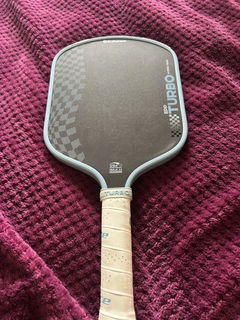
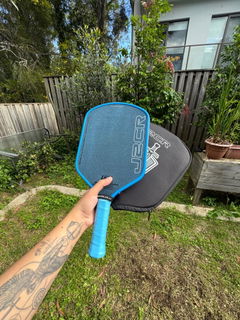
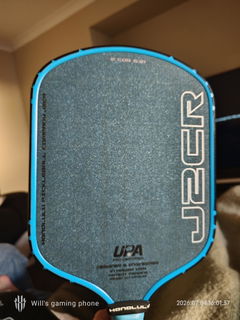
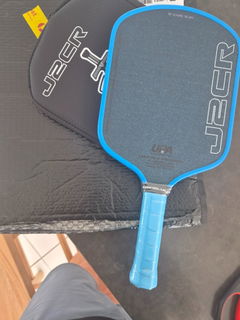
Pickleball Paddles
Australia's paddle market moved fast, and most of what is written about it is spec-sheet copy rewritten by someone who has never played. This is the version from two people who hit every paddle before it goes on the site. Four things decide how a paddle plays, and once you understand them the rest of the marketing language stops mattering.
The four decisions that actually change how a paddle plays
1. Core thickness: 16mm or 14mm
The core is honeycomb polypropylene, and its depth sets the whole personality of the paddle. A 16mm core deforms slightly more on contact, so the ball sits on the face a fraction longer. That extra dwell is what lets you drop a third shot short instead of floating it, and reset a fast ball into the kitchen instead of popping it up. A 14mm core gives less, so the ball leaves quicker and harder, with a smaller margin for error and a tighter sweet spot.
If you are not sure, take the 16mm. Most club players win more points from a reset that lands than from a drive that is ten percent faster, and 16mm is where the majority of our range sits for exactly that reason.
2. Shape: elongated, widebody or hybrid
Total surface area is capped by the rules, so shape is a trade, never an upgrade.
- Elongated is longer and narrower. You get reach on the stretch volley, a longer lever for serves and drives, and more face to brush up the back of the ball for topspin. The cost is a narrower, higher sweet spot, so off-centre contact is punished.
- Widebody is shorter and wider. The sweet spot is broad and low, which forgives the mishits everyone hits under pressure. You lose reach and some leverage.
- Hybrid splits the difference and is the shape most players end up happiest with, particularly at the kitchen line where hand speed beats reach.
Handle length rides along with shape. A longer handle suits two-handed backhands and adds leverage; a shorter one leaves more face.
3. Weight, swing weight and twist weight
Static weight is the number on the box and the least useful of the three. Swing weight is how heavy the paddle feels while it is moving, and it is what you actually notice: high swing weight ploughs through the ball on a drive and arrives late in a hands battle, low swing weight is the reverse. Twist weight measures how much the face resists turning when you catch the ball off-centre. High twist weight is quietly the most valuable spec in the sport, because it makes your bad contacts land in.
All three are tunable after the fact. A few grams of lead tape at 3 and 9 o'clock raises twist weight and widens the effective sweet spot; the same weight at 12 adds drive at the cost of hand speed.
4. Face and construction
Spin comes from friction, and friction comes from a raw, unpainted carbon face. Paint or a sealing layer buries the grit and the bite goes with it. Raw faces do wear smooth over time, so a spin-first paddle is a consumable in a way a control paddle is not.
Construction is the other half. A thermoformed frame with a foam-injected perimeter resists flex, so energy a softer build would absorb gets returned to the ball. That is where the power in modern paddles comes from, and it is also why the good ones cost what they cost. If the jargon is the problem, our guide to foam cores, thermoforming, Gen 3 and Gen 4 explains all of it in plain English.
Shop by how you play
Control paddles for touch and resets. Power paddles for drives and put-aways. Spin paddles with raw carbon faces for heavy topspin. All-court paddles if you would rather not specialise, which for most club players is the right answer.
Shop by level
Starter paddles are built to forgive: thicker cores, lower swing weight, wide sweet spots. Intermediate paddles start trading forgiveness for specificity, usually through a grittier face and more mass away from the hand. Professional paddles hold their stiffness season after season and reward a swing that is already grooved, which also means they give you very little help. If you are wondering whether the step up is worth it, we ran the numbers in mid-tier vs pro-tier paddles.
Shop by brand
RPM for spin-led thermoformed builds. JOOLA for the tour line most Australians recognise. Six Zero for control and a genuinely broad price ladder. Honolulu for long-lasting grit. Friday and Enhance for foam cores at sensible money. Selkirk and Luzz for power. Aireo for foam-core power lower down the ladder. The brand guide covers what each one is actually for.
Not sure where to start? The paddle finder narrows it in a few questions, and our picks by play style is the honest shortlist.
Buying a paddle in Australia
We are an authorised Australian reseller for the brands we carry, so paddles are factory-fresh, covered by the manufacturer's warranty, and assessed through us rather than an overseas portal. Grey-import paddles bought offshore usually have neither. Everything ships from Sydney in one to three days, free Australian delivery applies over $150, local pickup is available from Mount Colah, and every paddle comes with a grip. Factory-fresh paddles can be returned within 30 days.
We hold recommended retail pricing on carried brands rather than running rotating sales, so the price on the page is the price.
Common questions
How much should I actually spend on a paddle?
Enough that the face is raw carbon rather than painted, because that is the line where spin becomes available. Below that you are buying a paddle you will replace inside a season. Above it, the money buys durability, twist weight and consistency rather than raw performance, and the returns flatten out. Match the spend to how often you play, not to what the pros use.
14mm or 16mm?
16mm if you want the ball to sit down at the kitchen, 14mm if you want it to leave faster. Most players are better served by 16mm because resets win more points at club level than pace does. If you already drive well and your problem is finishing, 14mm is worth trying.
Elongated or widebody?
Elongated if you play from the baseline, serve big, or want maximum spin. Widebody if you live at the kitchen line and value forgiveness. Hybrid if you do a bit of everything, which is most people. The hybrid vs elongated comparison works through it on one paddle family.
How long does a pickleball paddle last?
A raw carbon face loses grit in six to twelve months of regular play, and spin goes with it. The core outlasts the face in most cases. Signs it is done: a dead or tinny sound, a soft spot on the face, spin you can no longer produce on a shot you used to hit. Store it in a cover and keep it out of hot cars and it lasts longer.
What is delamination?
The carbon face separating from the core, usually at the edge. It produces a distinctive hollow sound and an unnaturally hot response off the face, and it is a warranty matter rather than wear. If you think a paddle has delaminated, email support@pickld.com.au with the order number and photos and we lodge it with the manufacturer.
Paddle, racket or bat?
They are the same thing. Pickleball's own rulebook says paddle, but plenty of Australians who came from tennis or table tennis say racket or bat and everyone knows what is meant. We wrote about what Australians actually call it.
What grip size do I need?
Most modern paddles ship in a narrow band around 4 1/4 inches, and the practical answer is to build up rather than down. Add an overgrip or two if the handle feels small or your hand cramps; you cannot make a grip smaller without stripping it back. A grip that is slightly too small still lets you generate wrist snap, whereas one that is too large will not.
Once you have the paddle, sort the rest: pickleball balls, grips, covers and lead tape, nets, or a complete pickleball set if you are starting from nothing. New to the game entirely? Start with pickleball for beginners in Australia.