Pickleball has a noise problem. Every player knows it; every neighbour, partner, and sleeping kid within earshot knows it. A standard outdoor ball cracks at 70–90 dB on impact, about the same as a vacuum cleaner running in the next room. That’s loud enough to rule out late drilling in the garage, wake the household for an early session, or turn a backyard rally into a passive-aggressive note from the fence-line.
The fix isn’t earlier bedtimes. It’s a foam ball.
The Pickld Silent Pickleball is our take on the quiet-ball category (tournament-spec dimensions, regulation weight, near-silent on contact), Sydney-stocked, dispatched in days, and priced at A$6 a ball or A$15 for a 3-pack. This guide walks through what makes a pickleball “quiet,” how the Pickld compares to the category originals like the Enhance Ninja Ball, the use cases that actually justify owning a few, and what it isn’t.
The noise problem, in plain numbers
Pickleball noise isn’t a vibe. It’s a measurable problem that’s closed courts, triggered council complaints, and pushed strata boards to ban driveway play in plenty of Australian suburbs. The two sources are the paddle face (a sharp pop) and the ball (a hollow crack). The ball is the louder of the two on most impacts.
Rough sound benchmarks for reference:
- 40–50 dB: a quiet library or conversation at a distance
- 50–60 dB: normal conversation at one metre
- 60–70 dB: an office, a dishwasher, traffic at a distance
- 70–90 dB: a vacuum cleaner, a busy restaurant, a standard outdoor pickleball on a hard hit
- 90+ dB: lawnmower, hairdryer at full power
That’s the gap a foam ball closes. A standard outdoor Franklin X-40 cracks loud enough to carry across a house; a foam ball stays at conversational volume on a hard contact and dips lower than that on dinks. That’s the difference between drilling at 9pm and not drilling at 9pm.
What the Pickld Silent Pickleball is, in one paragraph
The Pickld Silent is a one-piece EVA foam ball built to tournament-spec geometry: 73mm diameter, ~25g weight, 40-hole pattern, high-visibility yellow. The foam construction drops impact noise to roughly conversational volume (the category benchmark is under 60 dB on hard hits for similar foam balls) while keeping enough bounce and flight predictability that drills, dinks, and drives translate back to a regulation outdoor ball. It’s not USAPA approved. It’s not a match ball. It’s a training and practice ball for the times noise actually matters.
The specs that matter
| Material | EVA foam, multi-cell density |
| Diameter | 73mm (2.91″) – matches USAPA regulation |
| Weight | ~25g – matches USAPA regulation |
| Hole count | 40 |
| Colour | High-visibility yellow |
| Noise reduction | ~70% vs standard outdoor (foam category benchmark: under 60 dB) |
| USAPA approved | No – training and practice use only |
| Best for | Indoor drilling, backyard, ball machine, coaching, apartment training |
| Price | A$6 single ball · A$15 for a 3-pack |
How it stacks up against the other quiet balls
The foam-ball category isn’t new. The Enhance Ninja Ball kicked it off in the US a few years ago and remains the reference point. Since then most of the major ball brands have launched a version: the Diadem Official Quiet Ball, the CORE STEALTH, GoSports Q-Foam, the GAMMA Librarian, and a growing field from indie makers like Hudef Sport. They’re all variations on the same idea: 73mm-ish foam ball at regulation-ish weight with a 40-ish hole pattern.
The Pickld matches them on the spec sheet that actually matters: regulation 73mm diameter, ~25g weight, 40 holes, sub-60-dB foam-category noise profile. The real difference is the buying maths for Australian players.
A Ninja Ball direct from the US is roughly US$7–9 a ball before international shipping, GST, and a 3–6 week wait. By the time it lands in Sydney you’re looking at A$15–20 per ball all-in, and you’re hoping the parcel doesn’t get held up at the border. The Pickld Silent is A$6 a ball or A$5 a ball in the 3-pack, dispatched from our Sydney warehouse in 1–3 business days metro. No import wait, no surprise GST on arrival, no chasing a tracking number across three continents. Same spec, faster to your door, no exchange-rate maths.
Who this ball is actually for
The honest pitch: if you don’t have a noise problem, you don’t need a foam ball. Stick with a Franklin X-40 outdoor for matches and use whatever your club uses for training. But if any of the below sound familiar, a 3-pack of Silent Pickleballs will quietly fix a problem you’ve been working around:
- Apartment or strata-restricted players: the difference between practising in the lounge room and not practising at all. Dinks against a wall stay near-silent; drives off a paddle face stay at conversational volume.
- Backyard and driveway players: won’t crack fence palings, scuff a garage door, or chip the paint off a parked car. Kids can play unsupervised without the household flinching every time the ball lands.
- Garage and shed setups: pair with a hitting wall or rebounder and drill at any hour without the noise carrying through the house. The bounce is consistent enough to set up a hitting routine that translates back to court play.
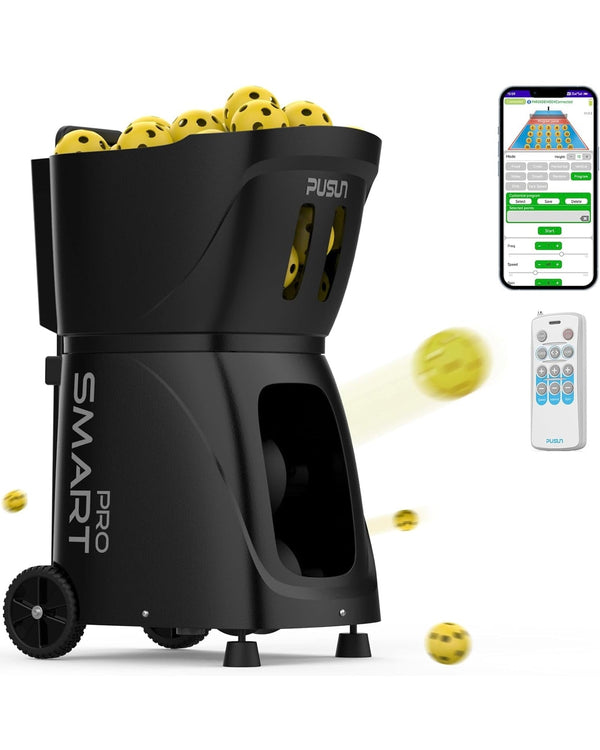
- Ball machine owners: this is the one nobody talks about. A ball machine session at full feed rate is loud. The machine itself is fine; the impact noise from 80 balls in 20 minutes against a paddle face is what wakes the household. Run a Silent Pickleball through it for the early-morning or late-night sessions and the whole setup goes from “weekend only” to “daily.”
- Coaches teaching kids and beginners: softer impact, less intimidating contact, easier to track at slow speeds. Indoor lesson environments where parents are watching benefit from the lower decibel floor.
- Late-night drillers: the player who wants to work on third-shot drops at 10pm without rearranging the household’s sleep schedule. A foam ball makes that a non-issue.
What to pair it with
The Silent Pickleball is most useful with a ball machine and a paddle that gives clean feedback at low feed rates. Set the feed to dink-tempo and you can drill third-shot drops with the machine running in the background while everyone else in the house sleeps. Because it's a foam ball, even an app-driven late-night machine session becomes possible without complaints.
For ball-machine sessions specifically, the 3-pack at A$15 is the cleanest entry. You can run a long machine set, lose one to a backyard hedge, and still have two in rotation. Most users grab a 3-pack to start and a second 3-pack within a month once the late-night machine sessions become routine.
What this ball isn’t
To stay honest: the Silent Pickleball is a training and practice ball. It is not any of the following:
- Not tournament approved. USAPA-sanctioned events run a hard-plastic ball, usually the Franklin X-40 outdoor at most Australian tournaments. For match-spec preparation, drill on the same ball your event uses.
- Not a wind ball. Foam is lighter than plastic in airflow and flutters in any meaningful breeze. Outdoor use in still air is fine; outdoor use in wind isn’t the right call.
- Not a long-haul matchplay ball. The foam compresses over months of heavy use, which softens the bounce. Most users get 30–50 sessions out of a Silent Pickleball before noticing a difference; that’s great for a training ball, not enough for a regular match rotation.
- Not a replacement for an outdoor ball. If your weekly play is outdoor doubles at the local courts, you still need a Franklin X-40 or equivalent. The Silent Pickleball lives alongside it for the training context, not instead of it.
Frequently asked questions
How long does a Silent Pickleball last? Foam pickleballs don’t crack the way hard-plastic balls do. They compress. Most players get 30–50 hitting sessions out of one before the bounce starts to soften enough to notice. At A$5–6 a ball, that’s roughly the cost of a cup of coffee per month of regular drilling.
Will they work outdoors? In still air, yes: backyard, driveway, and shaded court settings are fine. In any meaningful wind they flutter, because foam is lighter than plastic in airflow. Indoor or wind-protected outdoor settings are the sweet spot.
How quiet is “quiet”? A standard outdoor pickleball measures 70–90 dB on impact, about the volume of a vacuum cleaner running in the next room. Foam balls in the same category drop to under 60 dB on hard contact (conversational volume) and lower than that on dinks. You can drill in the same room as a sleeping toddler.
Are they USAPA approved? No. They’re a practice and training ball. The USAPA-approved outdoor ball most AU tournaments default to is the Franklin X-40; for indoor sanctioned play the Franklin X-26 is the standard.
Will the bounce translate back to a regulation ball? Close enough that drills feel real. The 73mm diameter, ~25g weight, and 40-hole pattern match regulation specs, so paddle response on touch, drives, and serves is in the same ballpark. The one difference: foam is slightly softer off the face, so very fine touch shots feel marginally different. Most players adjust inside a session.
Can my kids use them? Yes. This is actually one of the best uses. Softer contact, lower noise floor, won’t damage furniture if a shot goes wide. A 3-pack is a sensible kids’ coaching starter kit.
The verdict
The Silent Pickleball is a small fix for a real problem. Pickleball is loud; foam balls aren’t. If you have a noise-sensitive training context (apartment, backyard, late-night ball-machine session, kids’ coaching), a 3-pack at A$15 is the cheapest version of solving it.
Compared to importing a Ninja Ball or its category siblings from the US, the Pickld Silent matches the spec sheet and lands in 1–3 business days from Sydney instead of 3–6 weeks across the Pacific. No exchange-rate maths, no border GST, no chasing a tracking number. Same ball geometry, faster to your door, the practical Australian buy.
Grab a single ball to try the feel, or the 3-pack if you already know the use case and want a ball-machine rotation. Free AU shipping on orders over $200, $9.99 flat-rate standard, 30-day returns on unused packs.
Related reading: our Franklin pickleball balls buying guide for outdoor tournament play and our ball machine buying guide for the natural noise-sensitive pairing. Browse our full pickleball balls range for outdoor, indoor, and training options.